

Perfect Spring Days
Finding quiet joy wherever you are on Earth

Beneath the May Trees
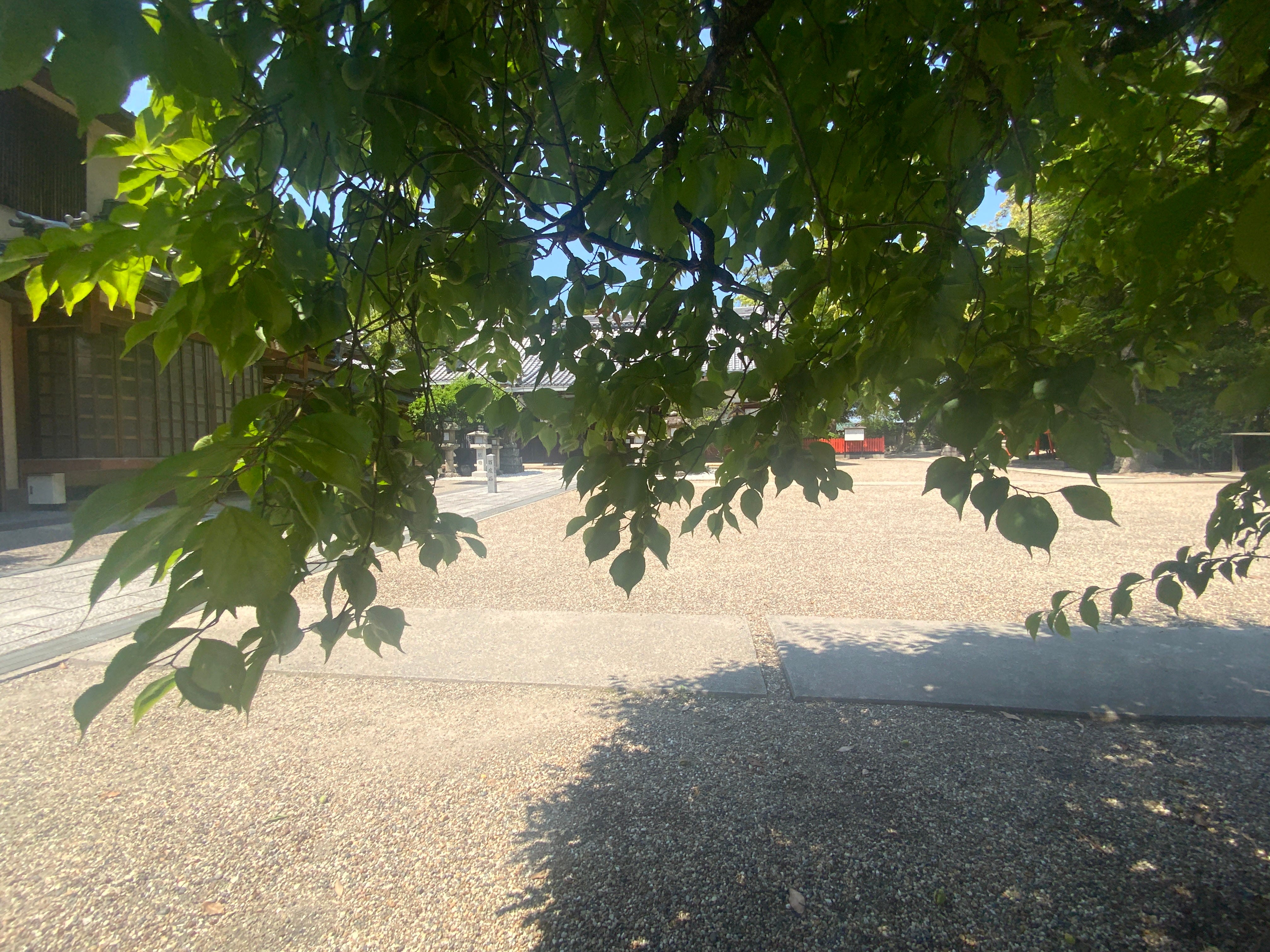
One day in May, I was sweeping beneath the large sendan tree at the shrine.
The falling of its old leaves had mostly come to an end, and above my head, fresh green leaves and small pale-purple flowers spread out like a canopy.
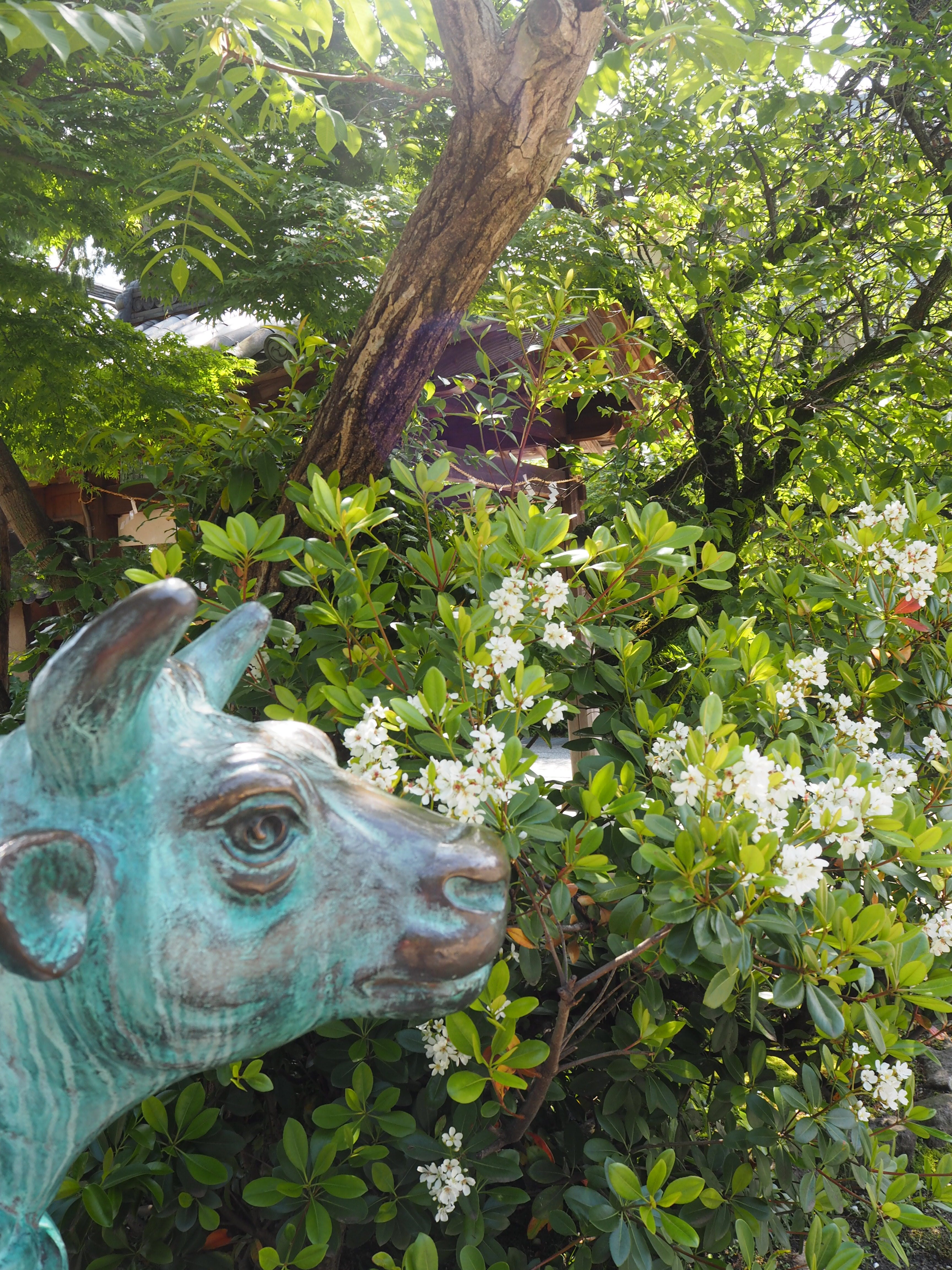
The flowers of the sendan tree were blooming like drifting clouds of lavender. Beneath them, the air was filled with a sweet fragrance, something like chocolate mixed with matcha powder.
Standing there with my bamboo broom, I felt almost like one of those “noble beings in disguise” who appear in Noh plays.
Although the sky was clear and bright, beneath the great sendan tree it was cool and dim. The Japanese word konoshita-yami(木下闇) — “the darkness beneath the trees” — felt exactly right.
Then, as if blending into that darkness, a single black swallowtail butterfly slowly crossed before me.
Together with the sweet scent of the sendan flowers, the sight made me think:
“Is that… a kami?”
When Nature Teaches Ritual
Perhaps human beings burn incense and worship in darkened spaces because, at some deep level, we are trying to recreate this kind of divine experience found in nature.
Ritual spaces are not invented out of nothing. Perhaps they are human attempts to gather, shape, and remember what nature sometimes gives us freely.
When something travels across the sea — a ritual, a prayer, a food, a calendar, a way of seeing the world — it does not remain unchanged. It takes root in a new climate. It begins to breathe with the trees, flowers, insects, and seasons of that place.
Perhaps this is why a shrine is never only a building. It is also trees, shade, roots, insects, birds, frogs, fragrance, damp earth, fallen leaves — all the living presences gathered around the kami.
Frogs Begin to Sing
In the traditional Japanese calendar, the year is divided into seventy-two small seasonal markers, called shichijūni-kō(七十二候). The beginning of May falls around the season known as Kawazu hajimete naku(蛙始鳴) — “frogs begin to sing.” It is the time when frogs that have been sleeping through the winter emerge from the earth, make their way toward water, and begin calling out in search of a mate.
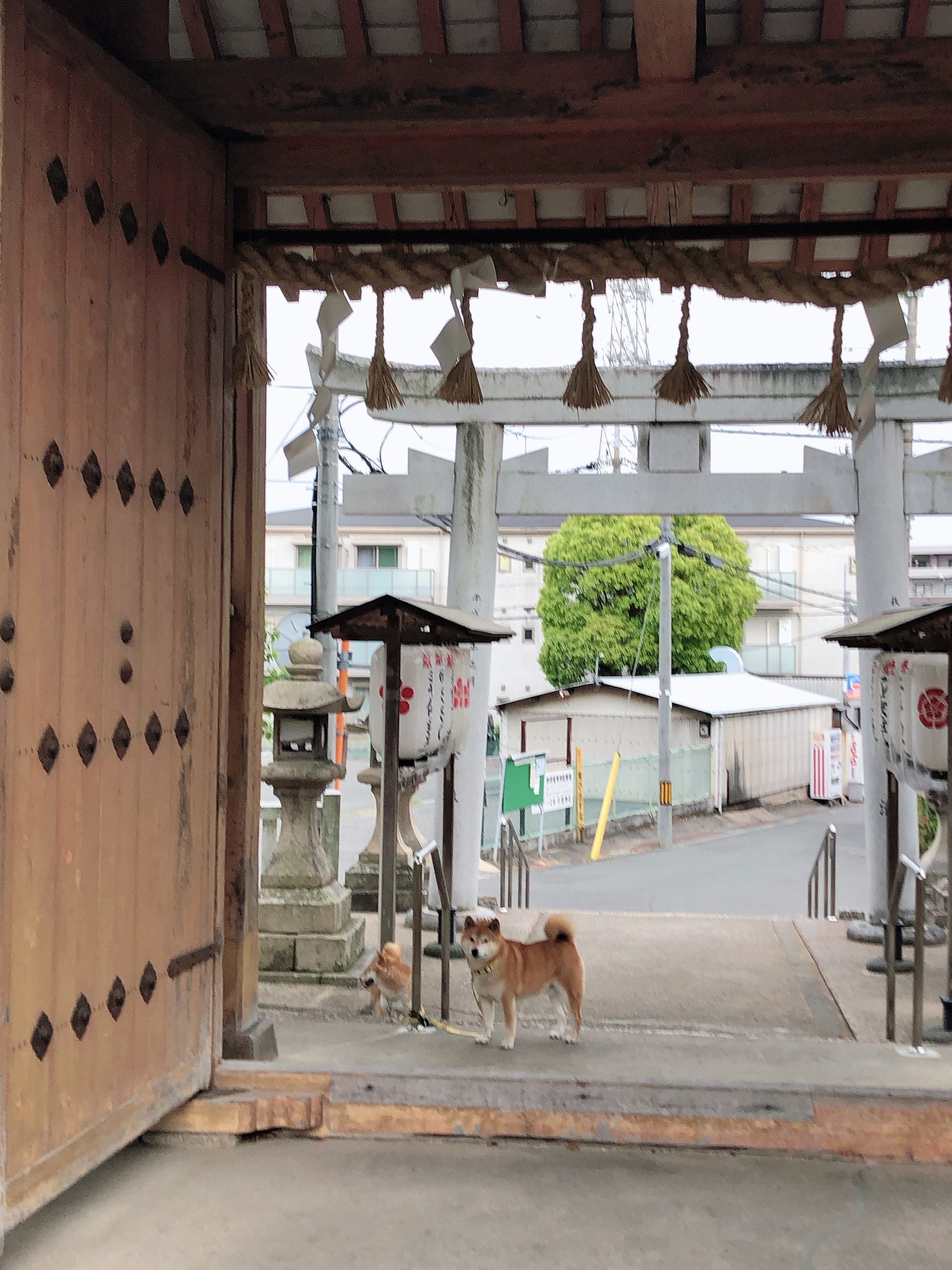
When I was training for my Shinto priest qualification, I attended practical training at Yoshida Shrine in Kyoto.
On a beautiful May day, I was sweeping on Mount Yoshida, beside Kyoto University. While sweeping there, I sometimes came across Kyoto University students practicing choral exercises on the mountain path, or young couples tucked away in the woods.
These things surprised me. But there was something that surprised me even more.
One day, I heard a strange sound: karakara, korokoro, kurukuru —like the sound of tiny bells made of wood.
“What is that warm, yet wonderfully clear sound?” I wondered.
So I asked one of the priests.
“Oh, those are forest green tree frogs,” he said. “They started singing today.”
To my amazement, wild forest green tree frogs were living in the pond in the courtyard of the shrine office.
I thought:
“Ah, even the frogs in Kyoto sound refined!”
Their voices were completely different from the familiar geko-geko chorus of frogs in the countryside. Not that I dislike the great rural chorus of frogs, of course.
I remember feeling both astonished and deeply impressed — by the accuracy of the old calendar, and by the admirable punctuality of Kyoto’s elegant frogs, who seemed to observe it so faithfully.
Chimaki for the Fifth Day of the Fifth Month
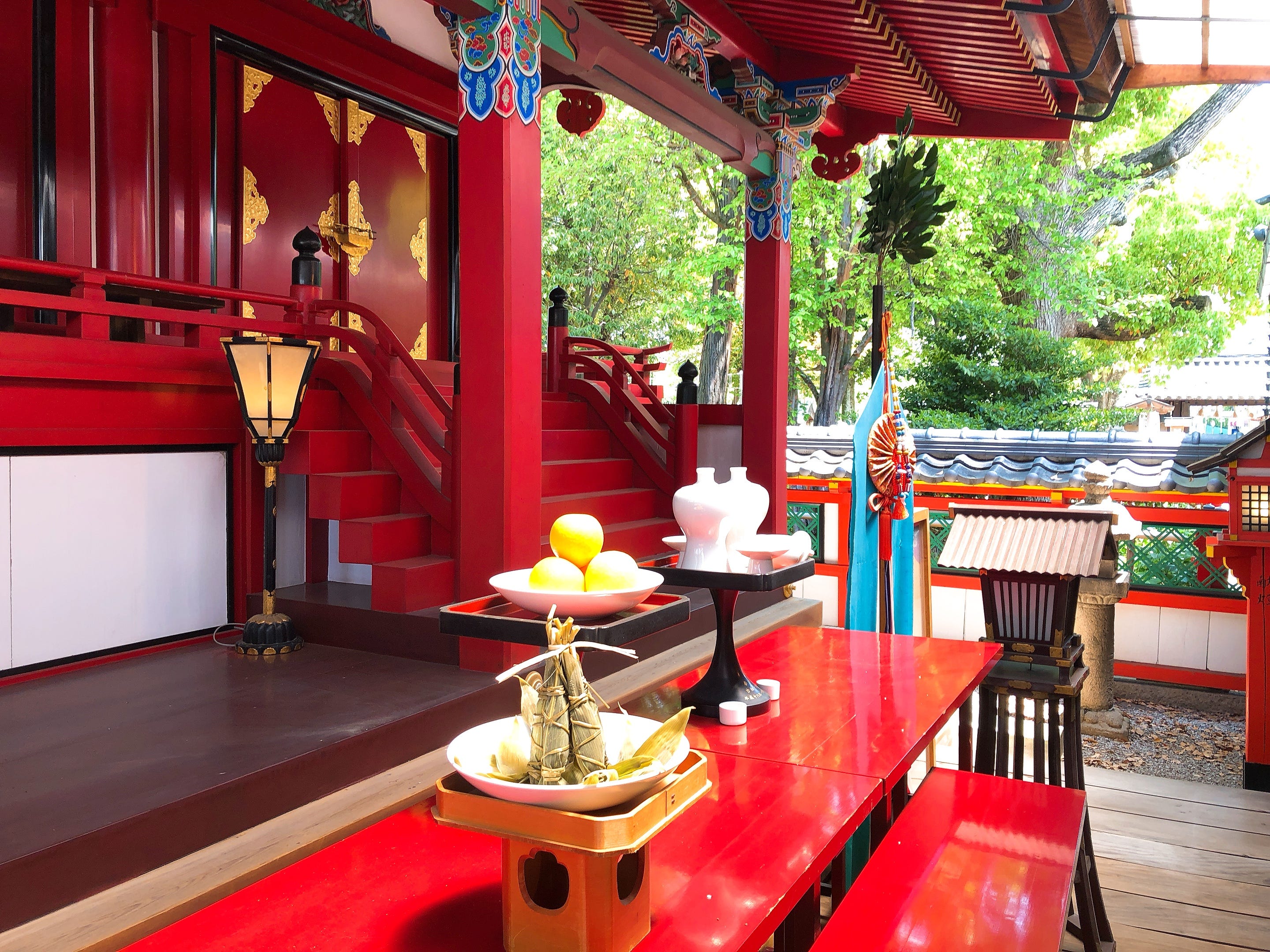
One of the foods offered to the kami on May 5 is chimaki.
It is a kind of rice cake wrapped in several layers of sasa bamboo leaves and carefully tied with strings made from plant fiber, giving it a shape rather like a spool of thread.
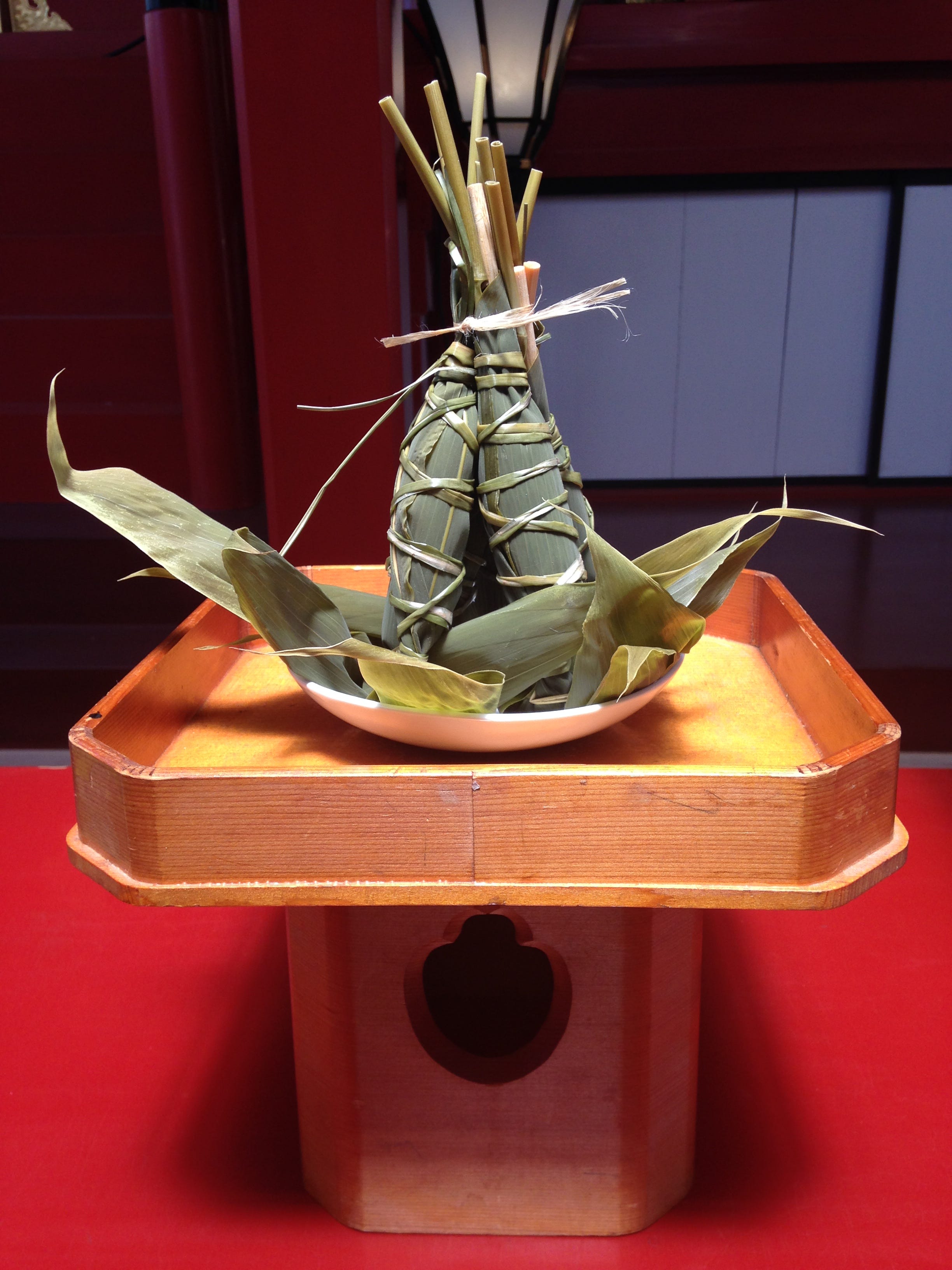
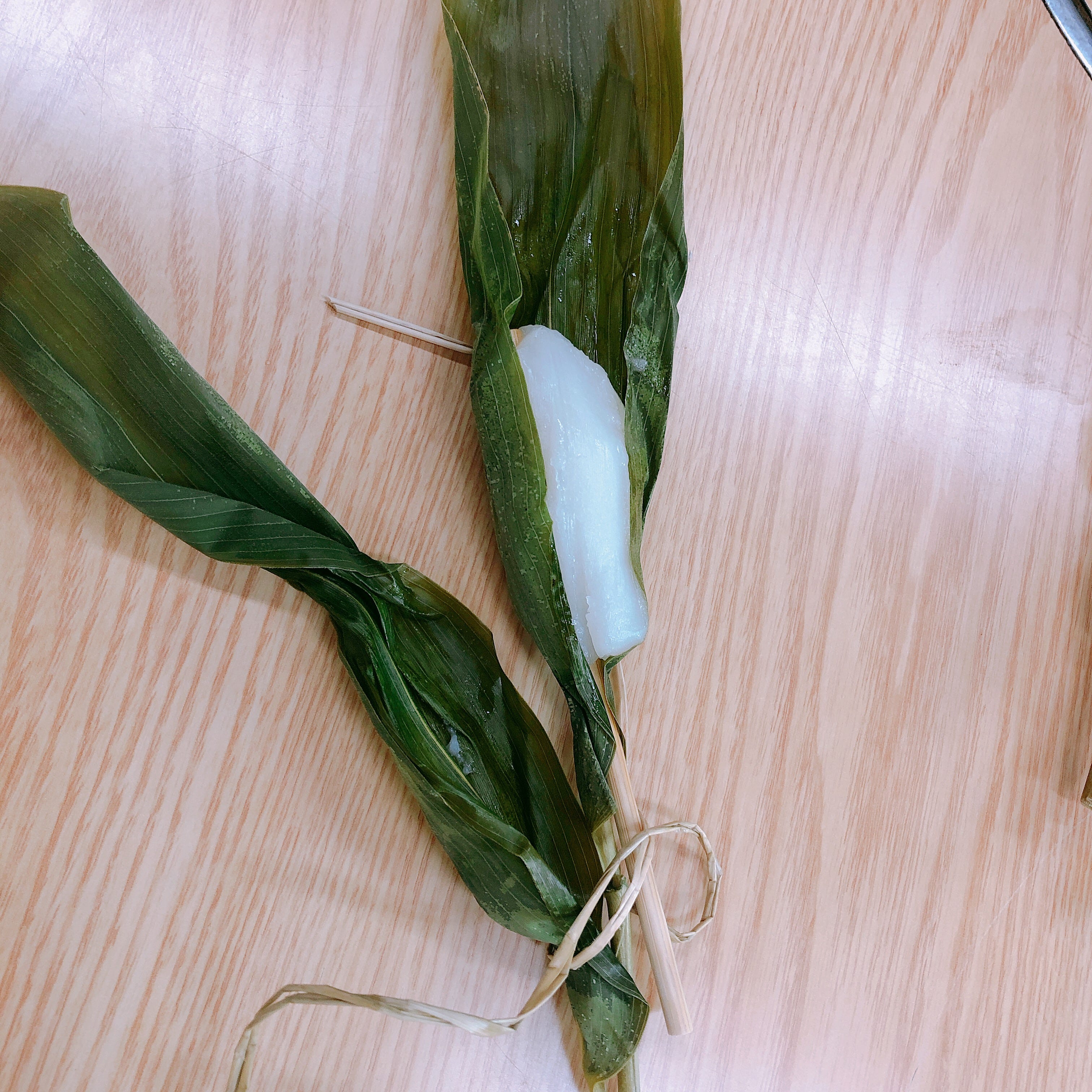
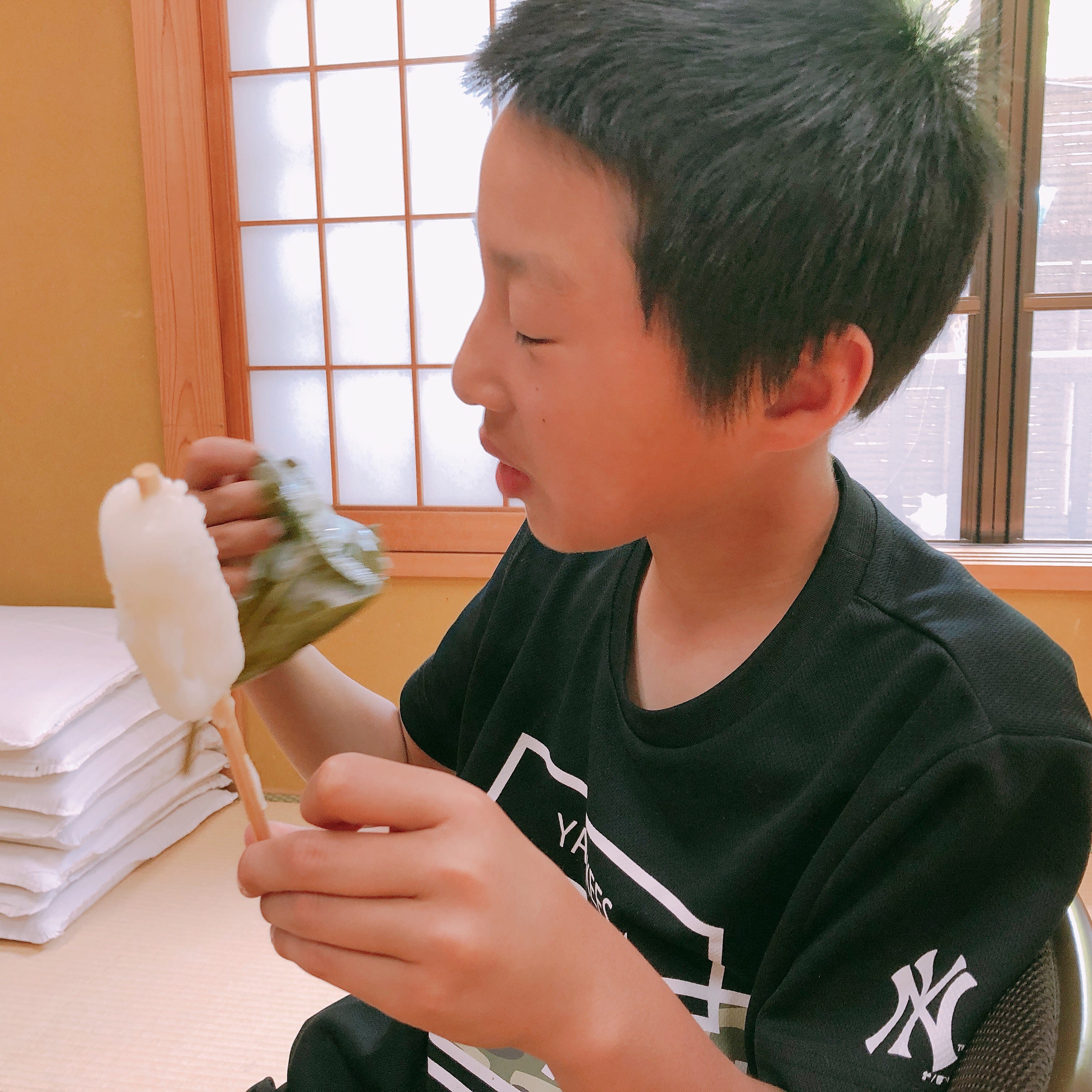
The rice cake offered to the kami is eaten later that same day. When you slowly unwind the strings, a long, slightly translucent, beautiful white rice cake appears inside. It is faintly sweet, with a bright and gentle flavor perfectly suited to this season.
Originally, chimaki was not wrapped in sasa leaves, but in chigaya — a kind of reed or cogon grass. That is why it came to be called chimaki , from chigaya-maki, “wrapped in chigaya.”
In other words, the name refers not to the filling, but to the plant wrapped around it. The custom itself came to Japan from China, where rice dumplings are eaten on the fifth day of the fifth month. Over time, the form changed in Japan, but the memory of the leaves remained.
The Priest’s Mental Map of Grass
Chigaya has long been regarded as a plant with purifying power. It is also used in the large ritual ring called chinowa, through which people pass during the Great Purification rites.
In Japan, plants like this — strong, vigorous plants that grow almost anywhere — have often been used in purification rituals, so that we may partake in their life force. But in urban life, these same plants are often disliked, cut down, and pushed away.
As a result, Shinto priests in cities often find themselves struggling to obtain them whenever a ritual requires them.
If, while driving through the suburbs on a date, a young person looks out the car window and murmurs,
“Oh, there is some good chigaya growing along that riverbank,”
or,
“The chigaya along this national road is very fine,”
then that person is probably an urban Shinto priest.
He or she is constantly marking the locations of chigaya in a mental map, updating it whenever necessary. Then, when chigaya is needed for a ritual, the priest goes to one of those remembered places and cuts it.
Priests in the countryside laugh and say,
“Why would you go out of your way to cut chigaya? It grows everywhere.”
But unlike sakaki, which is sold commercially for shrine use, chigaya is treated as an ordinary weed. For urban priests, it is one of the more difficult ritual plants to obtain.
Today, the leaves used to wrap chimaki are often sasa bamboo leaves rather than chigaya. Sasa, too, is a vigorous plant, and it has a lovely fragrance.
Still, by continuing to call the rice cake chimaki, the memory of its original wrapping in chigaya leaves remains.
Substitution, Adaptation, and Living Practice
In Shinto, certain plants are used for purification, or as yorishiro — objects or places where kami may be invited to dwell. At the same time, substitutions have always been common.
Japan stretches across a wide range of latitudes, so some plants do not grow in certain regions. And with modernization, some plants have become difficult to obtain in urban areas. In such cases, plants with a similar presence, color, or form are used in their place.
I think this idea can be applied to Shinto practice overseas, and also to the daily worship of a kamidana, a home altar.
In the land where you are living now, during the season of fresh green growth, you may find plants that are vigorous, fragrant, and full of life.
You might receive just a few leaves from such a plant, bring them into your room, and offer them on your kamidana.
Or you might simply arrange them like a small table bouquet.
To sense resonance with the environment around you in this way — this, too, is a Shinto practice that can be carried out anywhere on Earth.
Beautiful, thank you for sharing your gift. I also really enjoy how you bring it up for us to enjoy and find a way to our own rituals in our own environments (which sadly is so far away from Japan).
Your "is that... a kami?" reminded me of a famous internet meme: "is this a bird?" - https://i.imgflip.com/2ezm9o.jpg
The sweeping with the bamboo broom is such a trademark of Shinto Priests, every time I see it on dramas, anime or real life, I kind of get jealous... It seems so peaceful.
It seems to me that chimaki are the equivalent of zongzi 粽子, but as you've said their form is different, being triangular and done with glutinous rice with some other fillings like fruits or meat. I don't think I've ever eaten chimaki but already had my share of zongzi.
I really enjoy about what you said about adaptation of leafs and customs for the overseas. Although Shinto has a lot of tradition and ritual, it is still amazing how one can adapt to the environment. An in my opinion, it is logical to do that. I can rest with ease that the leaves that I'm using as offering, despite not being sasaki, can be used.