

One More Snake
Plums, couscous, fish, and the presence of water

My office is the shrine office. The window where we offer omamori and ofuda opens wide, almost like a movie screen. Within that large square frame, the scenery of the shrine grounds is neatly cut out, and the approach to the shrine stretches across it in one straight horizontal line.
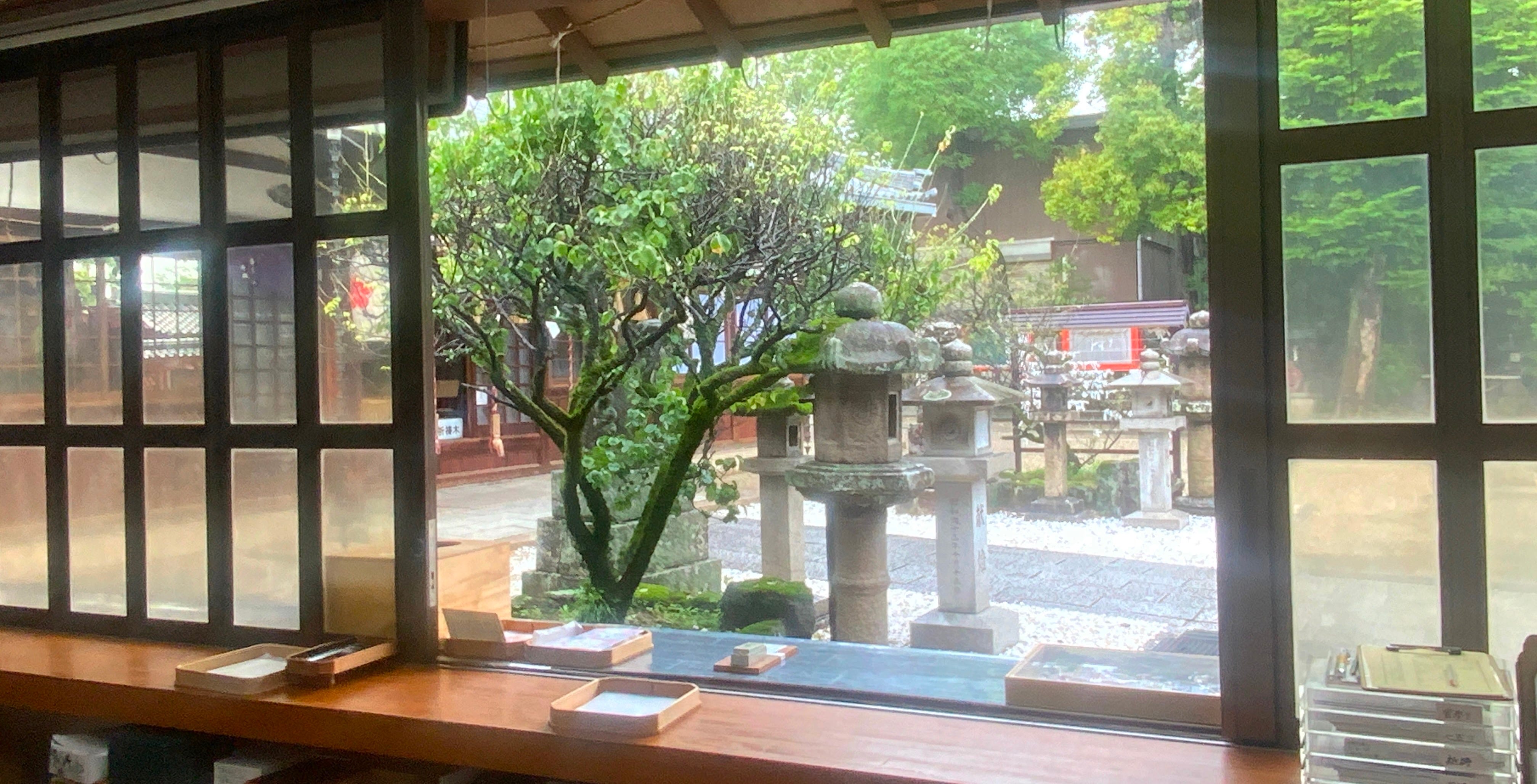
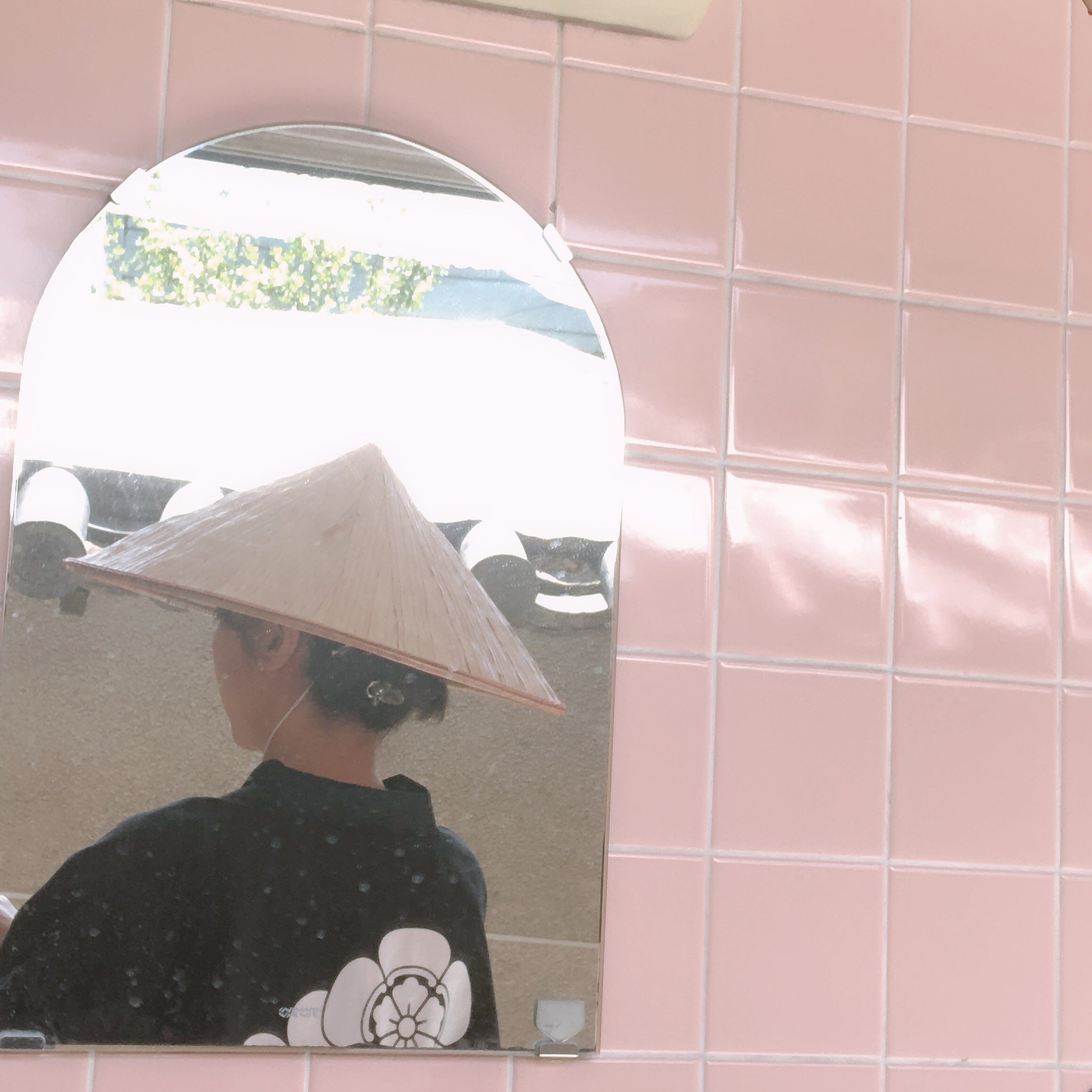
Just nearby, there is a plum tree. Every year, in early summer, during the rainy season, it bears many fruits. On an early morning when it is not raining, I put on a sugegasa straw hat, wear a happi coat marked with the shrine crest, and go out with a basket hanging from my arm to pick the plums. For the higher branches, I climb a ladder. For the even higher ones, I stand on the ladder and use a tool that looks a little like tongs. When the plums are still green, they are almost the same color as the leaves, and very hard to see.
“All right, I think I’ve picked most of them,” I say to myself.
Then Mr. H, an antique art dealer, comes along and starts fussing at me in thick Osaka dialect.
“There are still some over there. And there too. Look, there too. Ah, and over here as well.”
“There’s no end to this, so that’s enough for today!”
I say this, drink some cold water, and take a short rest. But once my eyes feel refreshed, I begin to notice, just as Mr. H said, that there are still green plums left here and there after all. In the end, I return to the work again.
Because I keep looking upward the whole time, my neck begins to hurt.
While all this is going on, the rain begins to fall.
The colors of the trees deepen at once, and the leaves rise into the air with a fresh green scent.
When I was a child living in Saitama, whenever it rained, I would put on my rain boots, open an umbrella, and squat down in the garden.
Raindrops struck the umbrella with a rattling sound, and water dripped from its edge. There was the warm, humid smell of grass rising from the soil, and the smell of leaves filling the air all around me. On rainy days, those smells seemed to become raindrops themselves, wrapping around my whole body.
When the rain stopped, the sparrows would suddenly begin chirping noisily. I looked up and saw a snake in a tree. One part of its belly was unnaturally round and bulging. It must have swallowed a chick, or perhaps an egg.
The snake moved from one tree to another in the garden. Because its body was like a cord, with only the middle part swollen round, it looked exactly like a shimenawa, a sacred boundary rope, stretched between the trees.
My mother went to call a neighbor, and the neighbor said something like, “That’s a fine aodaishō,” and picked up the snake with a pair of tongs, carrying it away somewhere.
They were similar to the tongs I used today to pick the plums.
Held between the tongs, the aodaishō bent and swayed like a whip. I wonder where it was taken.
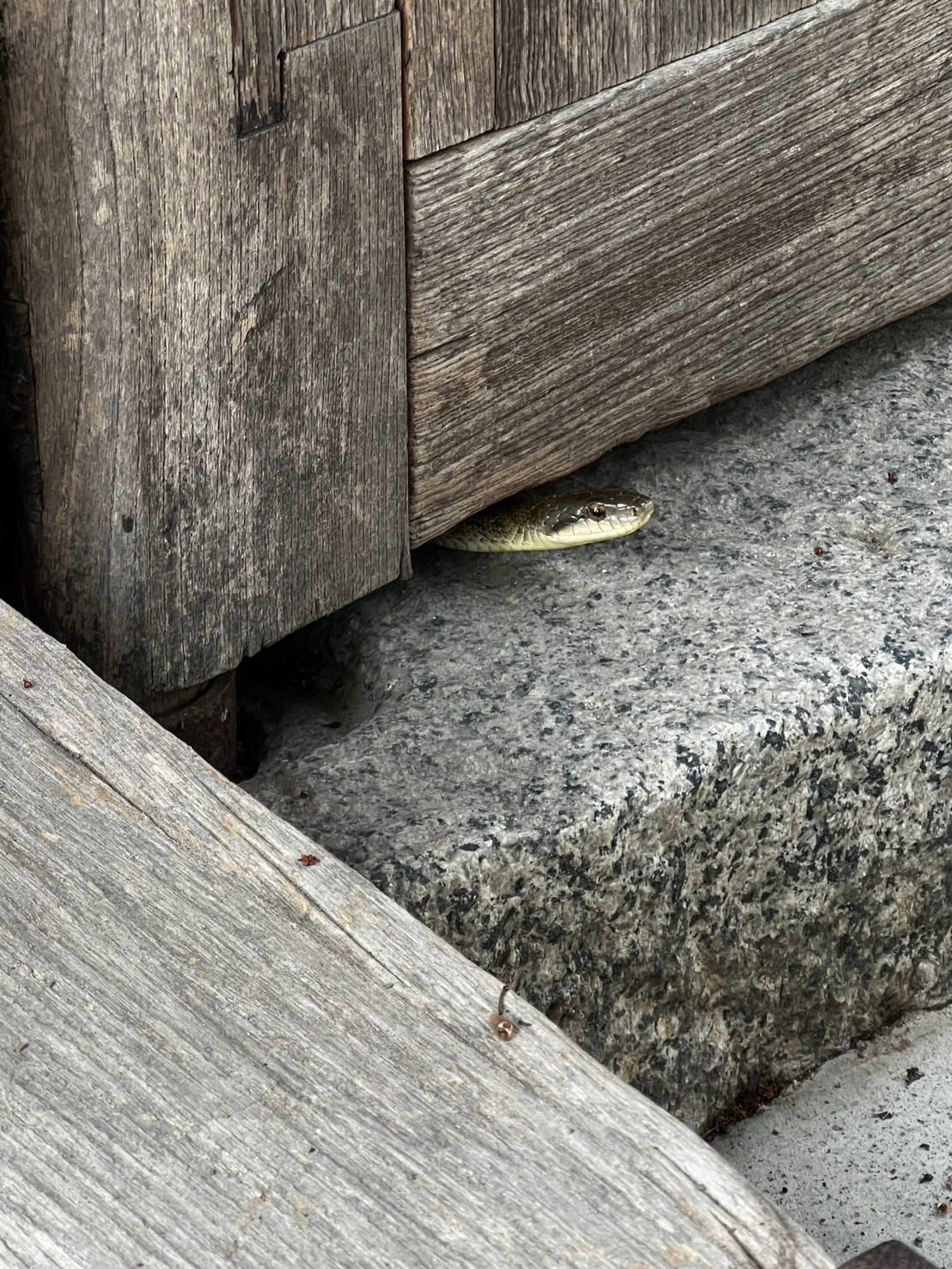
In early summer last year, while I was sweeping around the East Gate with a bamboo broom during the morning cleaning, a snake suddenly poked its head out from under the gate door.
“Good morning,” I said to the snake.
The snake looked at me and did not try to run away. It was almost as though it were waiting for me to continue speaking.
By chance, I happened to have my smartphone with me, though I usually do not carry it when I clean. So I took a photo of him. Or her.
Even after I took the photo, the snake did not seem offended. It simply looked steadily at me with an expression that seemed to say, “Did you get it?”
“I got it. Thank you. I’m going to the Expo today, with a friend,” I told the snake.
Because it was a snake living in Osaka, I spoke to it in Osaka dialect.
On the bus to the Expo, I posted the photo of the snake on the Notes feature of Substack, which I had only just begun using in May.
Then, at the Tunisian Pavilion, I ate couscous, one of my favorite foods. At the Spanish Pavilion, I looked at fish.
✳︎✳︎✳︎
Snakes carry the presence of water.
They appear near rice fields, rivers, ponds, wetlands, wells, and mountain springs. All the places I am drawn to, as someone who loves water, are also places where snakes quietly live.
Shrine rituals are woven together with rice cultivation, and for rice, water is life itself. Snakes have long been seen as beings connected with water: sometimes as water kami, sometimes as messengers of water-related deities such as Benzaiten. Because water brings rice, and rice brings abundance, snakes also came to be connected with fertility and good fortune.
And snakes shed their skin.
They look almost dead, and then they become new again. They cast off the old surface and appear in a fresh body. This is very close to the feeling of harae, purification. Something is removed. Something is renewed.
So when a snake appears at a shrine, I do not feel it as an ordinary accident.
Still, snakes are not only symbols or sacred signs. They are also living creatures, with bodies, hunger, and favorite foods.
Once, during a jichinsai, a ground-purification ritual, in the mountains of Minoh, all the eggs that had been placed as offerings on the sanbō trays were swallowed by a snake.
The people from the construction company who were attending the ritual were startled and did not quite know what to do.
Snakes are also connected with the presence of mountain kami. Water descends from the mountains and nourishes the rice fields. In that sense, the snake can be felt as the form of the kami deep in the mountain, the kami of the water source, and the kami who comes down to the fields.
Perhaps, in that jichinsai, by offering eggs to the mountain kami, we were able to pacify the spirit of the land.
Usually, after a ritual has ended, the offerings are given to the client as osagari, food carrying the blessing of the ritual.
But on that occasion, the kami had actually eaten the offerings.
I think it was a perfectly proper jichinsai.
The problem with snakes is that they don't seem to have figured out cars and the connection between them and roads. So here in the countryside you see the remains of many ex-snakes who were having a refreshing nap on the warm tarmac when a car came by.
I like how the snake in Minoh came to collect his rent in advance.