


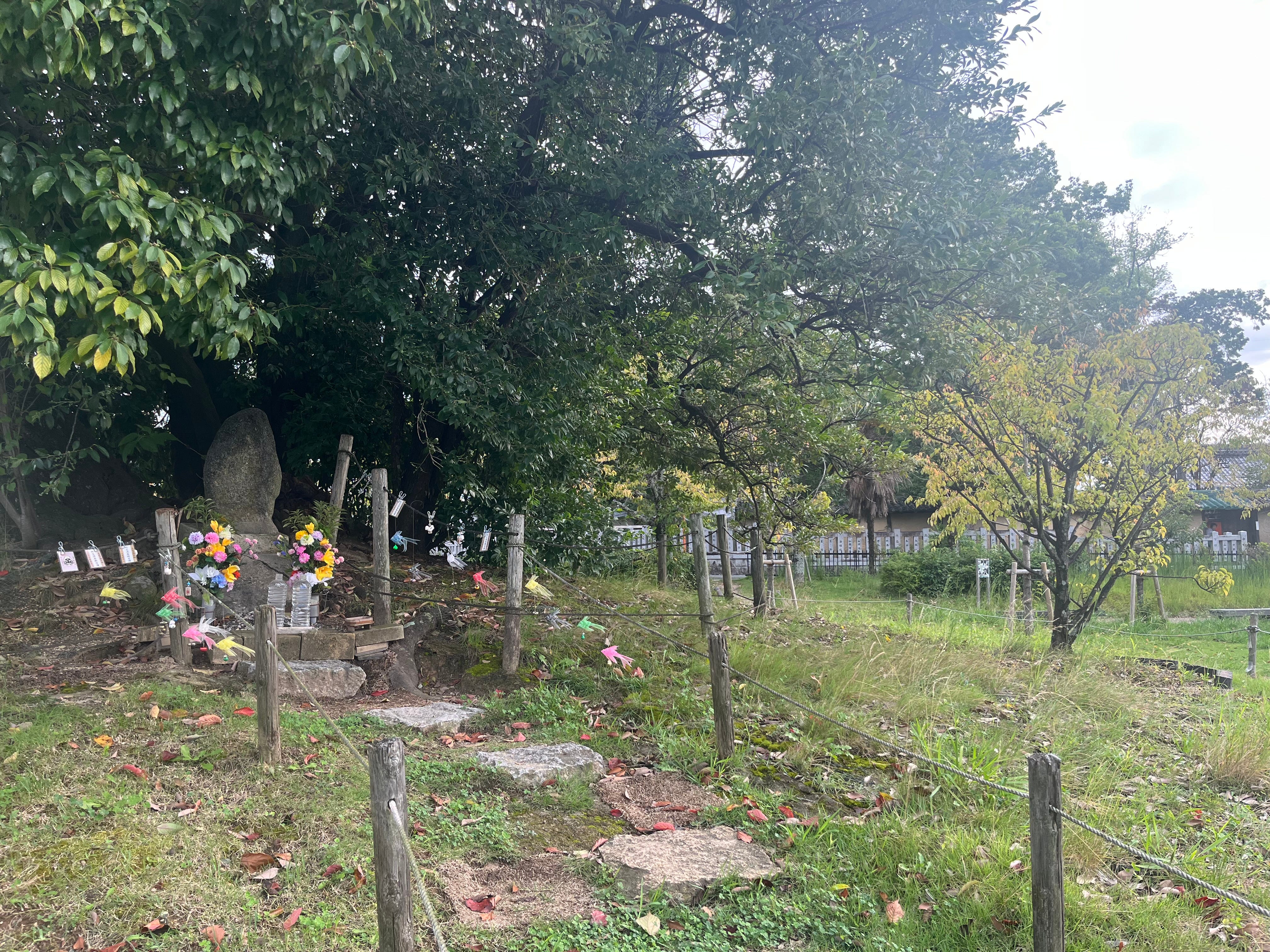
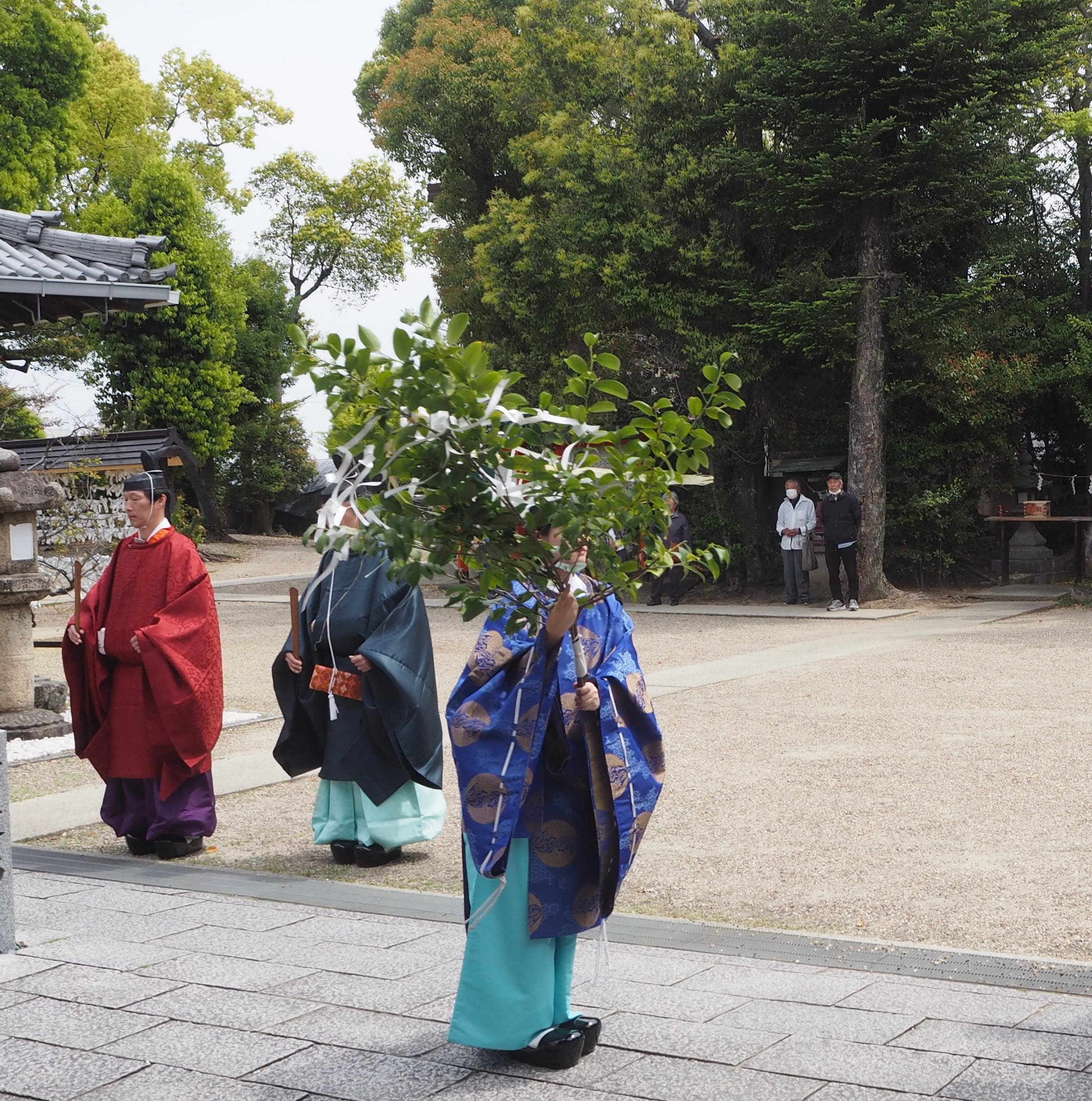
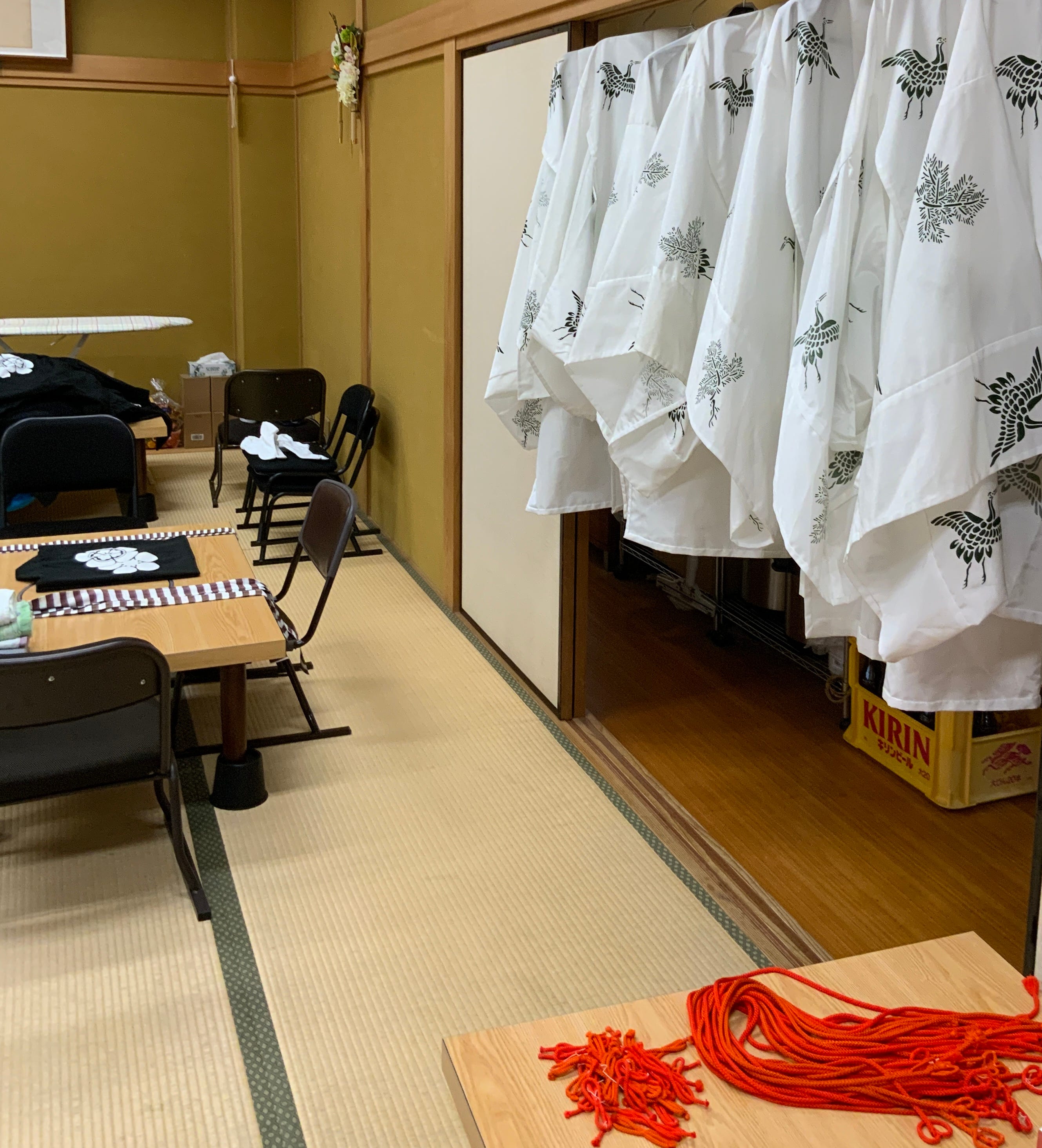
The other day, a major construction project was about to begin in the ujiko area of our shrine, and the companies involved gathered at our shrine for a ceremony to pray for safety during the construction work.
I say “ceremony,” but it is, of course, a sacred Shinto ritual.
For about a month beforehand, a young employee from the general contractor kept asking me detailed questions about what the participants should wear, the order of the ritual, the seating arrangement, and so on.
There was even this one:
“We were planning to begin the ceremony at 10:30, but one person absolutely cannot arrive until 10:45. If the ceremony goes past 11:30, will that be unlucky?”
In Japan, there is a traditional calendar system called rokuyō, which assigns good and bad fortune to particular days and times. On a day called tomobiki, the period around noon is generally said to be unlucky.
Each time, I reassured them: “Rokuyō is a folk belief used in everyday life. It has nothing to do with Shinto ritual.”
Eventually, the day arrived.
The young employees from the general contractor, dressed in suits and already sweating, hurried back and forth between the parking lot and the waiting room, trying to work out which unfamiliar older man belonged to which company, how important he was, and where he should be taken.
Apparently, this was the first time everyone involved in the construction project had gathered in one place.
Watching all this, I thought the waiting room must be terribly tense.
Then, while I was preparing things in the worship hall, I heard a huge burst of laughter coming from the waiting room.
It did not sound like thirty people chatting separately and laughing here and there.
They all laughed at once.
Then, after a while, another huge burst.
I assumed somebody had said something funny while introducing himself, but I could not stop wondering what on earth a person could say—or do—to win that much laughter in such a tense room.
Unfortunately, Osaka, where I live, is a place where being funny is treated almost as a priority, and every story is expected to have an ochi—a funny payoff.
Suppose I go to cheer for my child’s baseball team, and suddenly the coaches announce a surprise Mother’s Day event.
One by one, the mothers have to stand in front of everyone, listen to a few words of thanks from their children, and then say something in return.
The mother immediately before me bursts into tears.
Now I, as the next mother, have to make an instant decision.
Do I say something funny, make everyone laugh, and provide the ochi?
Or do I also burst into tears, creating a kind of “You too?” moment, and leave the ochi to the next person?
People born and raised in Osaka seem able to make these decisions almost unconsciously.
Naturally.
For me, having come from Tokyo, situations like this used to be absolute hell.
I am used to them now.
So when I heard that huge laughter coming from the waiting room, I thought,
Ah.
Osaka.
***
This September on Grooving with Kami, I have been following the story of Susanoo, without doubt one of the best-known and most popular kami among the countless kami of Japan.
In the previous installment, Susanoo went on a rampage in Takamanohara, and the sun goddess Amaterasu shut herself inside the Heavenly Rock Cave.
Takamanohara fell into darkness.
Night that never ended.
All kinds of calamities followed.
So all the kami gathered together on the dry riverbed of the Heavenly Yasu River.
They made special birds cry out.
They made a mirror from a particularly hard stone.
They made an ornament from many strings of magatama beads.
They performed divination using deer bones.
Following the result, they decorated a sacred evergreen tree with magatama, a mirror, and offerings.
They built the stage.
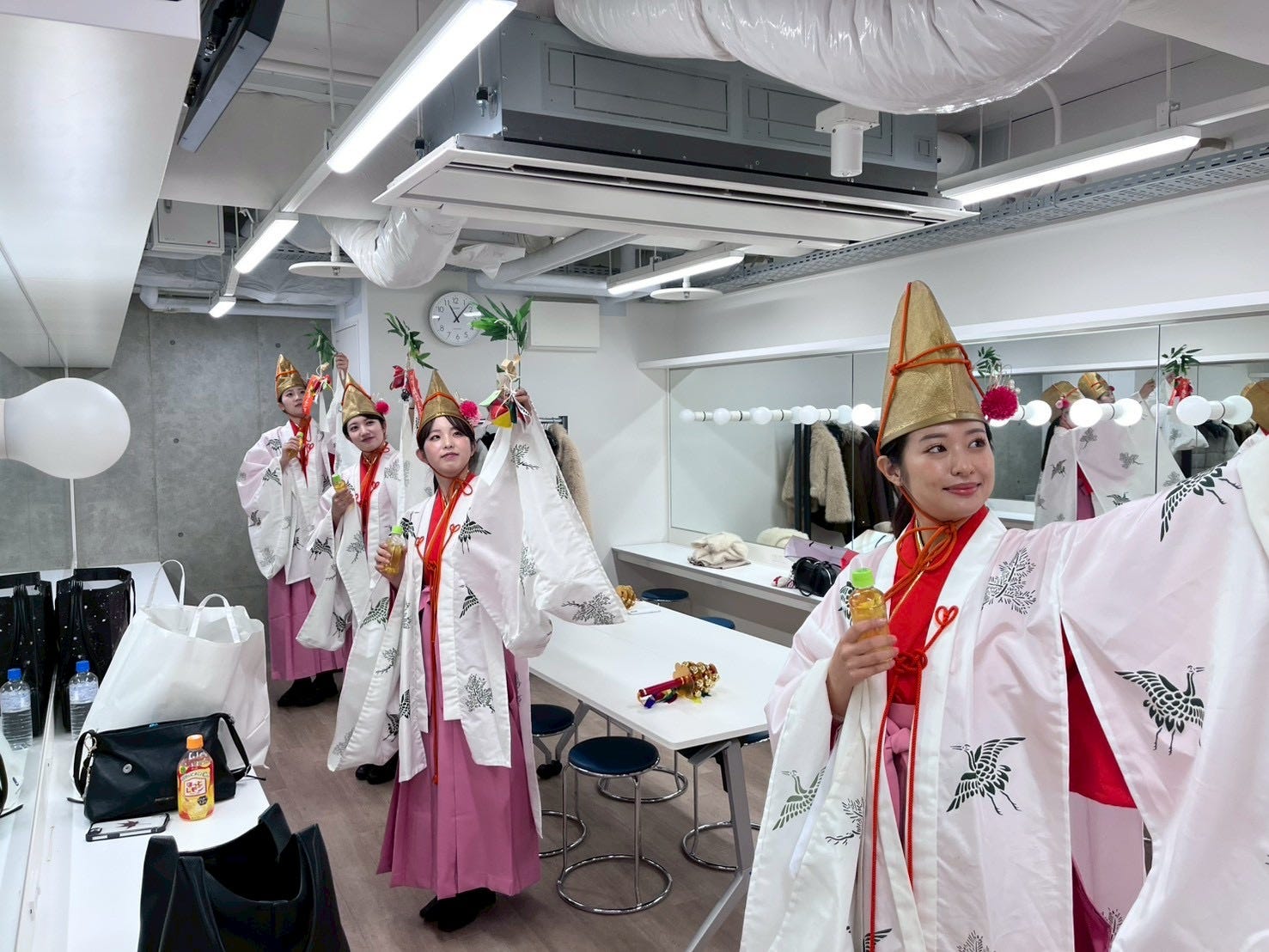
Then Ame-no-Uzume-no-Mikoto tied club moss across her body like a sash, wrapped a vine around her head, held a small branch of bamboo grass in her hand and rustled it softly, climbed onto an overturned tub, and began stamping her feet.
From this point onward, I think many readers will be astonished.
Ame-no-Uzume-no-Mikoto became possessed by the kami, exposed her breasts, pushed the cord of her clothing down until her genitals were visible, and danced. All the kami gathered there burst into laughter, so loudly that Takamanohara itself seemed to shake.
In ancient times, sexuality and laughter seem to have existed much closer together than they do for us now.
Something of that sensibility survived far into later periods. During the Edo period, shunga, erotic pictures, were sometimes called warai-e—“laughing pictures.”
Amaterasu became so curious about the enormous laughter outside that she opened the heavy door of the cave just a little.
At that moment, a tremendously strong kami pulled her out.
Light returned to Takamanohara.
Amaterasu did not emerge because she had been persuaded.
She was simply too curious about what everyone was laughing at.
In other words, she was more or less tricked into coming out.
The kagura we now offer to the kami at festivals may also, perhaps, be a way of catching their attention.
So.
Once Amaterasu had safely emerged from the cave, what happened to Susanoo?
All the gathered kami held a council.
They made Susanoo bear various objects as atonement for his offenses.
Then they cut his beard and the nails of his hands and feet, purified him, and expelled him from Takamanohara.
After his expulsion, Susanoo asked Ōgetsuhime-no-Kami for food.
She produced all kinds of delicious foods from her nose, mouth, and anus, prepared them in various ways, and served them to him.
Susanoo saw this and became furious.
“That is disgusting!”
He killed Ōgetsuhime.
Then, from her dead body, various things began to grow.
Silkworms from her head.
Rice from her two eyes.
Millet from her two ears.
Red beans from her nose.
Wheat from her genitals.
Soybeans from her anus.
Kamimusubi-no-Kami then had the seeds gathered.
From the body of a dead kami came the food that keeps us alive.
Myths in which crops and food emerge from the body of someone who has died are not unique to Japan. They appear in many parts of the world and have often been read as stories of death, rebirth, and fertility.
In Japanese mythology, the food goddess is killed by Susanoo’s boy-energy, and from her body come not only various grains but also the silkworms that produce silk.
Eating is also an act of turning another life into our own.
Seen that way, this scene in which food emerges from the corpse of Ōgetsuhime seems to place before us, without disguise, something very raw about what it means to live.
There is one more thing I find interesting.
In Shinto, death is regarded as a major source of kegare, impurity.
Yet, from that very “death,” “life” is born.
To me, this suggests that the workings of nature and the cycles of life can easily overwhelm the human concept we call kegare.
This is one of the things that draws me so strongly to Japanese mythology.
It does not begin with human ethics, morality, or philosophical concepts.
Instead, it seems to describe what happens in the natural world as it is—with all its contradictions, cruelty, and absurdity left intact.
***
The exiled Susanoo descended to a place called Torikami, upstream on the Hi River in the land of Izumo.
Then he saw a chopstick floating down the river.
From this, Susanoo reasoned that people must be living upstream.
He followed the river and found an old man and an old woman, with a young girl between them, all weeping.
“Who are you?” Susanoo asked.
The old man replied,
“I am a child of Ōyamatsumi-no-Kami, the kami of this land. My name is Ashinazuchi. My wife is Tenazuchi. This girl is our daughter, Kushinadahime.”
“So why are you crying?”
“We originally had eight daughters. But every year, Yamata-no-Orochi comes and eats one of them. Now this girl is the only one left. And this year, it will come again. That is why we are crying.”
“I see. What kind of serpent is it?”
“Oh, it’s terrifying. First, you should see the eyes. Bright red. Red like winter cherries. Then there’s the body. One body, but eight heads and eight tails. Moss, cedar trees, and cypress trees grow all over it. It is so enormous that it stretches across eight valleys and eight mountains. Its belly is always smeared with blood and raw with sores.”
Susanoo turned to the old man.
“Would you offer me your daughter?”
“We are grateful, but we do not even know your name,” said Ashinazuchi.
“I am the younger brother of Amaterasu. I have just descended from heaven,” Susanoo replied.
“That is indeed an august lineage. In that case, we will give you our daughter.”
So Susanoo transformed Kushinadahime into a comb and placed her in his hair.
Then he told Ashinazuchi and Tenazuchi:
“Prepare a very strong sake called yashiori no sake.
Build a fence around the area and make eight gates.
At each gate, build a platform.
On each platform, place a vessel for sake.
Fill every vessel with that strong sake.
Then wait.”
***
Strange, isn’t it?
In ancient stories, asking a person’s name and revealing one’s own often carries particular importance when a relationship between a man and a woman is about to be formed.
Yet here, Susanoo does not say, “I am Susanoo.”
He says, “I am the younger brother of Amaterasu.”
At this point in the story, Amaterasu’s name clearly carries far more trust and authority than the name of the exiled Susanoo himself.
Susanoo knows this.
Up in Takamanohara, he caused his sister endless trouble and was finally expelled because of it.
Yet down on earth, his sister’s name becomes proof of who he is.
And he uses it.
This moment, when Susanoo suddenly asks for Kushinadahime, may feel problematic—or simply unpleasant—when viewed through modern values.
But what do you think?
I find something almost refreshingly straightforward about it.
Susanoo does not defeat Yamata-no-Orochi first and then use his achievement as the basis for a marriage proposal.
He asks for the daughter first.
To me, the order feels almost like this:
“Give me your daughter first. Then—right. I’m definitely going to kill this thing.”
Perhaps that promise itself gives him more strength.
Of course, because he is a kami, his version of “May I have your daughter?” comes out more like, “Will you offer her to me?”
A little high-handed.
But perhaps we have to allow him that.
From here onward, Susanoo is slightly different from the Susanoo we have known until now.
He confirms the situation.
He makes a plan.
Then he waits.
Hmm.
Has Susanoo changed a little?
***
We desperately want to know what happens next.
But before we go any further, I want to return for a moment to the title of this post.
“A Chopstick Floats Down the River.”
This is the first thing the Kojiki tells us when Susanoo, expelled by the heavenly kami, descends to Ashihara-no-Nakatsukuni, the land below.
Compared with the horse falling through the roof of heaven in the previous installment, it is an astonishingly small scene.
Almost like something from a slice-of-life anime.
The old Susanoo might not even have noticed it.
But this Susanoo sees the chopstick and thinks:
A chopstick is floating down the river. Someone must be living upstream.
So he goes to have a look.
Ah.
Lonely Susanoo is kind of cute.
Imagine washing up on what seems to be a deserted island. Then one day, you see a spoon floating down a river.
Wouldn’t you feel an enormous sense of relief?
You might suddenly realize how badly you wanted to see another human being.
I think this is a lovely little scene because Susanoo, for a moment, reveals something almost human in the way his heart moves.
I just used a spoon for the benefit of English-speaking readers.
But for Japanese people, in this scene, it absolutely has to be a chopstick.
Chopsticks are such ordinary objects in Japan that we barely notice them.
But that is exactly why a single chopstick floating down a river can mean so much.
It means food.
Daily life.
Someone living nearby.
And perhaps, in its own small way, love.
That is why I feel such affection for Susanoo when he notices that single chopstick floating down the river.
***
Next week, at last, we reach the climax.
How will Susanoo defeat Yamata-no-Orochi?
Stay tuned.
I always love hearing about the people who visit your shrine. Laughter is indeed a great indicator in Kansai. I remember going drinking and laughing at something I overheard and how thrilled the person was that they kept trying to tell jokes.
Also the idea of being repelled by death, but death being a necessary cycle to bring out new life is one I frequently use to explain the role of Izanami Ōkami to others. I think to many people for understandable reasons, death is scary and unpleasant, but when you start thinking of it not as an end but the foundations for new life it becomes more palatable.
Thank you for the lovely article as always!
What you've written about the young employees being busy while organizing (dressed in a very uncomfortable way) the senior ones, the room tension of both the employees and the Mother's Day... That is some kind of social pressure that I find very scary. Back home, we take it more easy, not so much thinking about it. Nonetheless, I think there is also some pressure to be seen as the social leader, who is both an extrovert, charming and funny.
I'm guessing the rokuyou and this kind of chinese calendar must have some connection: https://cbu01.alicdn.com/img/ibank/O1CN01hQeQKc1ibuM9VddKj_!!2218487684432-0-cib.jpg
On them it also says what the day is auspicious for and what you shouldn't do, and some more stuff. I find them very amusing, although I don't understand a lot of its meaning.
One thing that I like about the story of Ame-no-Uzume-no-Mikoto is that, despite being half-naked, is exactly the way of how the sexuality is portrayed somewhat as natural and not something to be guilty for. I find that kind of portrayal very liberating.
I think I've mentioned something about it before, about Ogetsuhime-no-Kami, but don't recall exactly what, so I'm going to ask, why do Susanoo found the food disgusting?
"Compared with the horse falling through the roof of heaven in the previous installment, it is an astonishingly small scene.
Almost like something from a slice-of-life anime.
The old Susanoo might not even have noticed it.
But this Susanoo sees the chopstick and thinks:
A chopstick is floating down the river. Someone must be living upstream.
So he goes to have a look."
Thats what is fascinating of Susanoo, as I said before. He feels very human-like. First he cries as a child, then goes crazy as a teenager, now it feels he is turning an adult.
On a sumo related note: I'm loving Fujinokawa this basho! I call him the Angry Honey Badger. He is so aggressive and not caring about the consequences, it is always very exciting to see him fight.